Paul & Joe Sister | Cropped Cubist Blazer - Structured Short Jacket
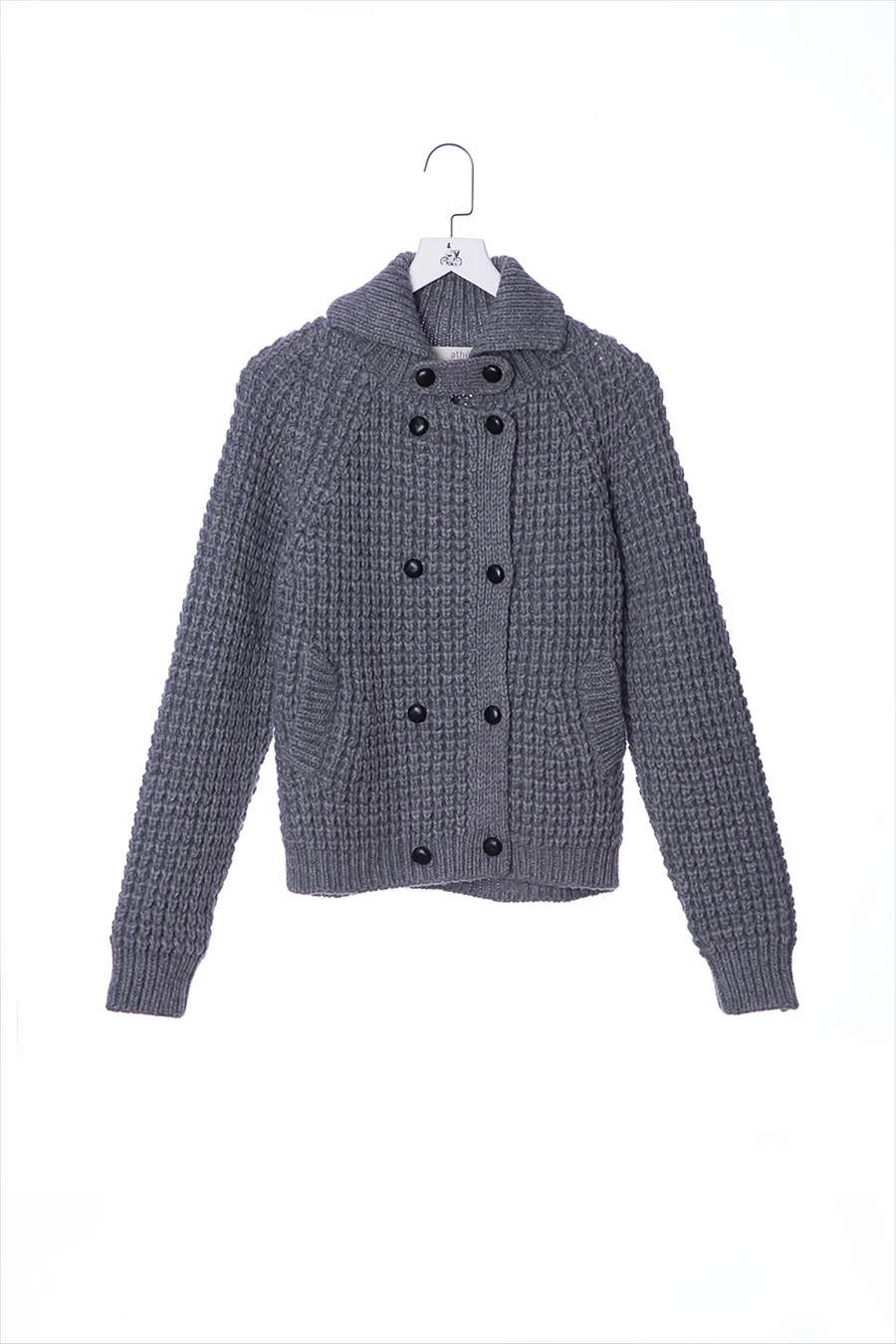
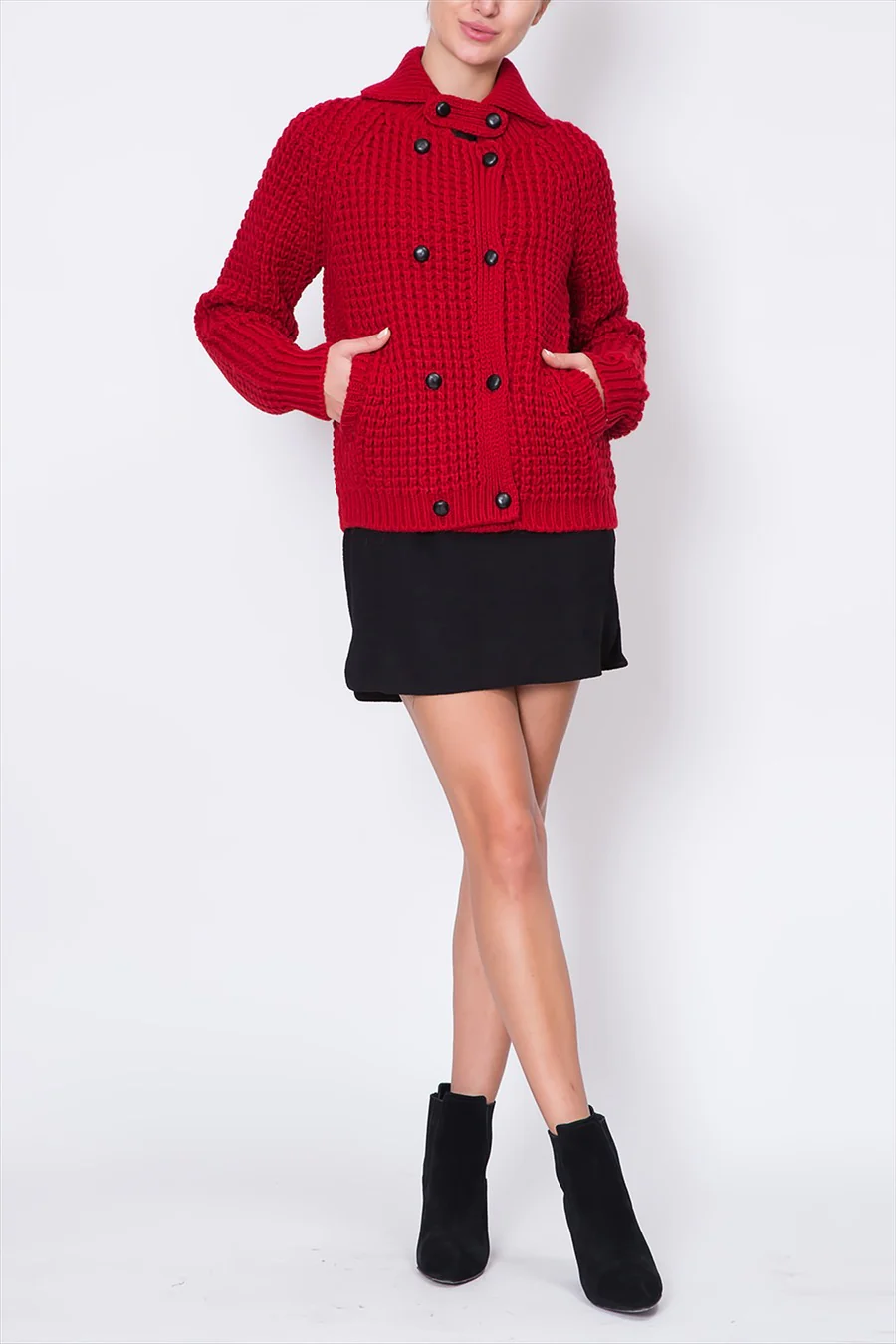
Paul & Joe Sister’s short blazer cuts a clean, architectural line that bypasses the expected. This is not a boxy office hand-me-down; it is a sharp, abbreviated silhouette that stops just below the ribcage, cropping the torso to create a deliberately broken proportion. The jacket’s cubist influence is immediately legible in the angular lapels and the precise, almost graphic placement of the pockets—a nod to the 282 CUBISTE reference that gives the piece its intellectual edge. The cut refuses to soften, offering instead a crisp, modern geometry that frames the upper body without overwhelming it. The fabric itself is a study in controlled weight—substantial enough to hold the blazer’s sculpted shape, yet light enough to avoid stiffness. Its hand is smooth and compact, with a slight matte finish that catches the light in a muted, even way. There is no give, no slouch; the weave is tight and deliberate, lending the garment a quiet authority. This is a cloth that stands away from the body, maintaining its silhouette without clinging or collapsing, even after hours of wear. The structure is the story here. Fit is intentionally concise. The shoulders are tailored but not restrictive, with a clean line that traces the natural shoulder before dropping into a straight, untapered sleeve. The body skims the torso without cinching—there is no waist suppression, no feminine darting. Instead, the blazer relies on its short length and clean hem to create a modern, androgynous proportion. The closure is minimal, likely a single button or hidden snap, allowing the jacket to hang open as a topper or closed as a defined shell. Construction feels rigorous: flat seams, sharp edges, no puckering at the lapel roll. Movement is surprisingly fluid for such a structured piece. The cropped hem allows full freedom of the hips, making this blazer ideal for layering over high-waisted trousers or a full skirt without bunching. It shifts with the arms, not against them. Seasonally, it straddles transitional weather—weighty enough for early autumn, light enough for a cool spring evening. It works over a silk camisole for a dinner out, or atop a chunky knit when the temperature drops. Style it with a fluid wide-leg trouser in a contrasting blue for a cerebral, art-school look, or pair it with raw-hem denim and a simple white tee to let the jacket’s geometry speak for itself. The styling note is this: treat the blazer as a punctuation mark, not the sentence—it works best when the rest of the outfit offers a relaxed counterpoint.
Original: $49.75
-65%$49.75
$17.41Product Information
Product Information
Shipping & Returns
Shipping & Returns
Description
Paul & Joe Sister’s short blazer cuts a clean, architectural line that bypasses the expected. This is not a boxy office hand-me-down; it is a sharp, abbreviated silhouette that stops just below the ribcage, cropping the torso to create a deliberately broken proportion. The jacket’s cubist influence is immediately legible in the angular lapels and the precise, almost graphic placement of the pockets—a nod to the 282 CUBISTE reference that gives the piece its intellectual edge. The cut refuses to soften, offering instead a crisp, modern geometry that frames the upper body without overwhelming it. The fabric itself is a study in controlled weight—substantial enough to hold the blazer’s sculpted shape, yet light enough to avoid stiffness. Its hand is smooth and compact, with a slight matte finish that catches the light in a muted, even way. There is no give, no slouch; the weave is tight and deliberate, lending the garment a quiet authority. This is a cloth that stands away from the body, maintaining its silhouette without clinging or collapsing, even after hours of wear. The structure is the story here. Fit is intentionally concise. The shoulders are tailored but not restrictive, with a clean line that traces the natural shoulder before dropping into a straight, untapered sleeve. The body skims the torso without cinching—there is no waist suppression, no feminine darting. Instead, the blazer relies on its short length and clean hem to create a modern, androgynous proportion. The closure is minimal, likely a single button or hidden snap, allowing the jacket to hang open as a topper or closed as a defined shell. Construction feels rigorous: flat seams, sharp edges, no puckering at the lapel roll. Movement is surprisingly fluid for such a structured piece. The cropped hem allows full freedom of the hips, making this blazer ideal for layering over high-waisted trousers or a full skirt without bunching. It shifts with the arms, not against them. Seasonally, it straddles transitional weather—weighty enough for early autumn, light enough for a cool spring evening. It works over a silk camisole for a dinner out, or atop a chunky knit when the temperature drops. Style it with a fluid wide-leg trouser in a contrasting blue for a cerebral, art-school look, or pair it with raw-hem denim and a simple white tee to let the jacket’s geometry speak for itself. The styling note is this: treat the blazer as a punctuation mark, not the sentence—it works best when the rest of the outfit offers a relaxed counterpoint.